3.4 MILLION TONS OF END-OF-LIFE TIRES ANNUALLY in Europe REQUIRE A SOLUTION.
OURS IS CALLED THERMOLYSIS.
Pyrum specializes in the industrial recovery of raw materials from end-of-life tires. Using thermolysis technology, the company recovers valuable components such as oil, carbon black and gas, making them usable again for industrial applications. Instead of incinerating or exporting valuable materials, Pyrum creates new raw material cycles. In this way, the company combines recycling, technology development and sustainability with the goal of transforming waste streams into system-critical resources for industry.
The Technology
WE CANNOT REINVENT THE WHEEL.
BUT WE CAN REINVENT HOW TO RECYCLE IT.
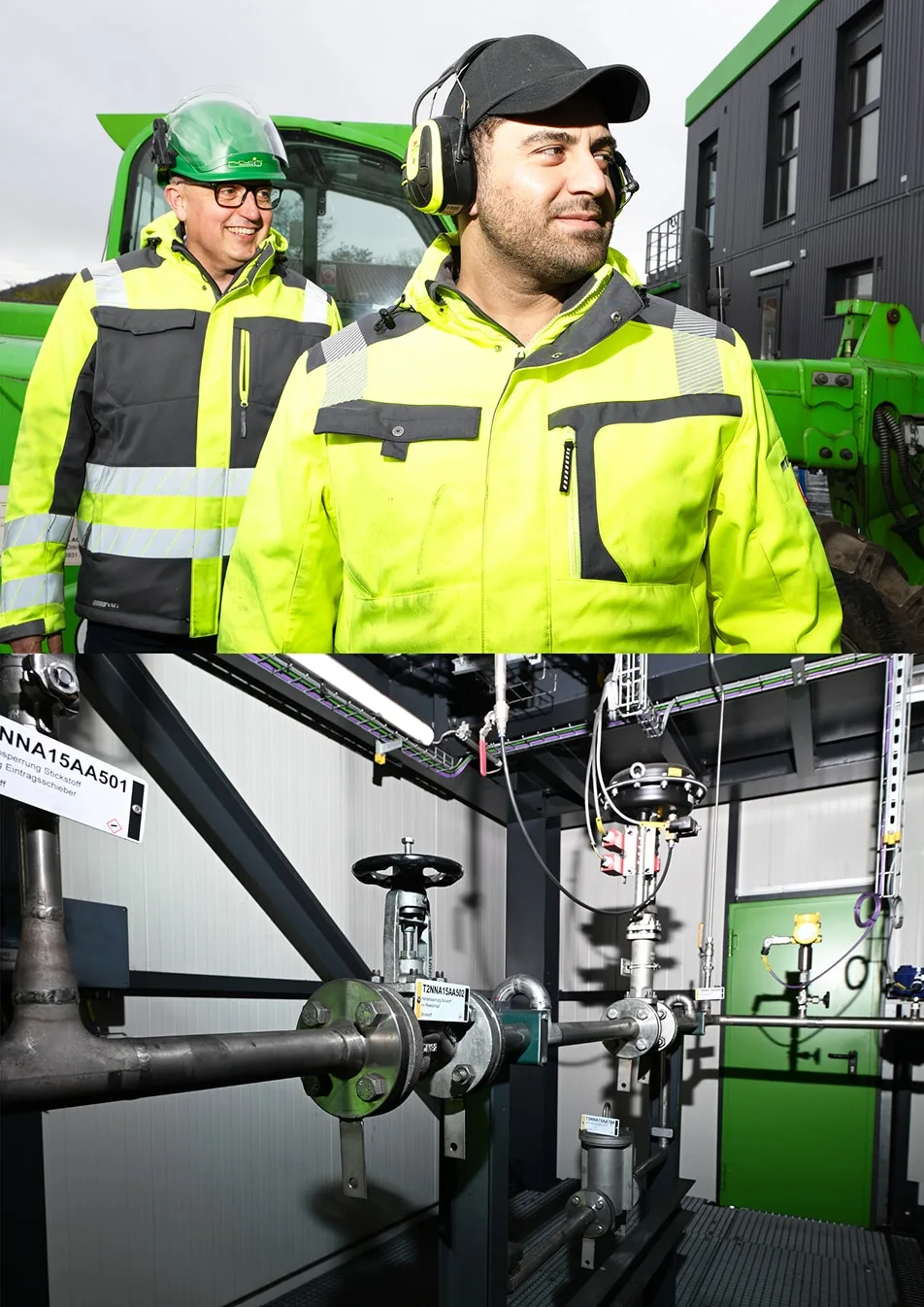
Using our patented technology, we transform rubber and plastic waste into system-critical raw materials for industry. What sets us apart is our patented Pyrum-Vertical Reactor: Inside it, the rubber granules are heated under controlled conditions in the absence of oxygen and thermally decomposed without incineration.
Learn about our process in detail:
Delivery and Shredding
Large quantities of end-of-life-tires are delivered to the main facility in Dillingen, where they are stored and sorted for further processing. This is followed by mechanical shredding, during which the input material is shredded and the rubber granulate is separated from the steel and textile.
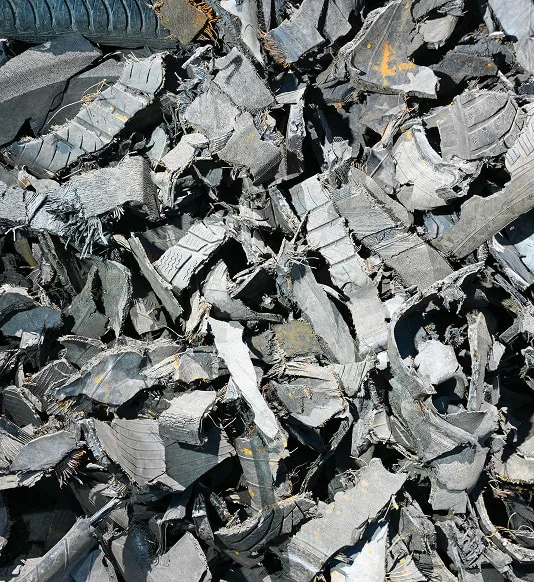
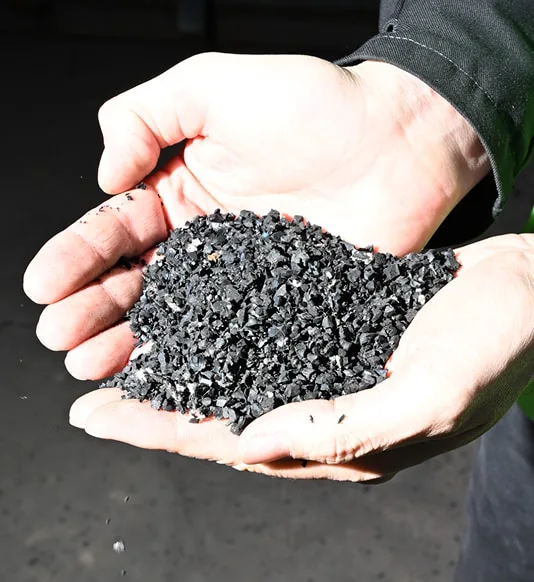
Secondary raw material in four grain sizes
(1-6mm)
FIBER AND STEEL SEPARATION
Depending on the type of tire, up to 100 kg of textile fibers and 150-250 kg of steel wire are recovered from 1 ton of end-of-life tires. Through further processing of the steel wire, Pyrum achieves a purity of over 95 percent.
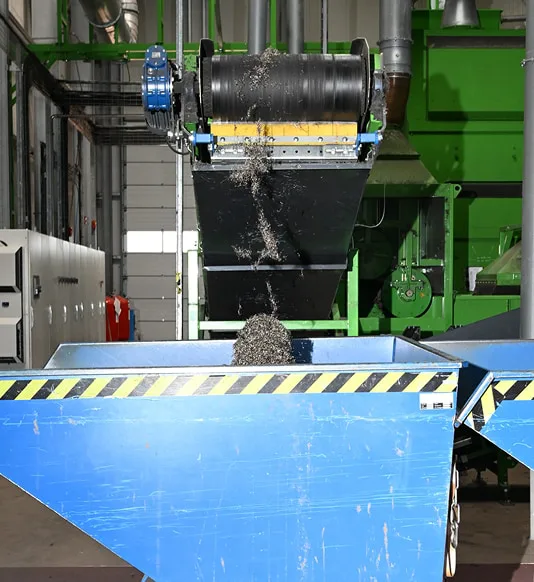
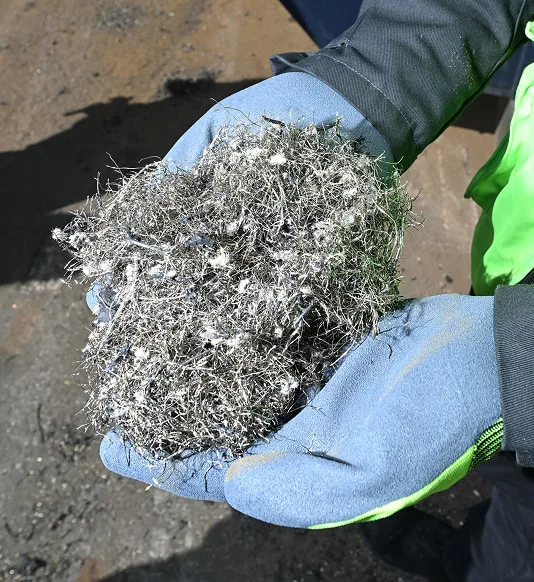
The resulting rubber granules are further processed
THERMOLYSIS
The process takes place in a closed, airtight system. What makes it unique is Pyrum’s patented vertical reactor, in which the rubber granules are heated and thermally decomposed under oxygen-free conditions. The granules move through the vertical reactor by gravity, while the temperature and process conditions can be precisely regulated to ensure a consistently high quality of the resulting raw materials.
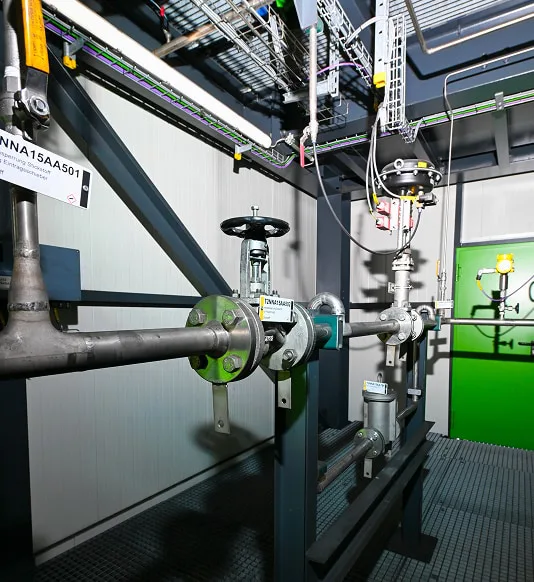
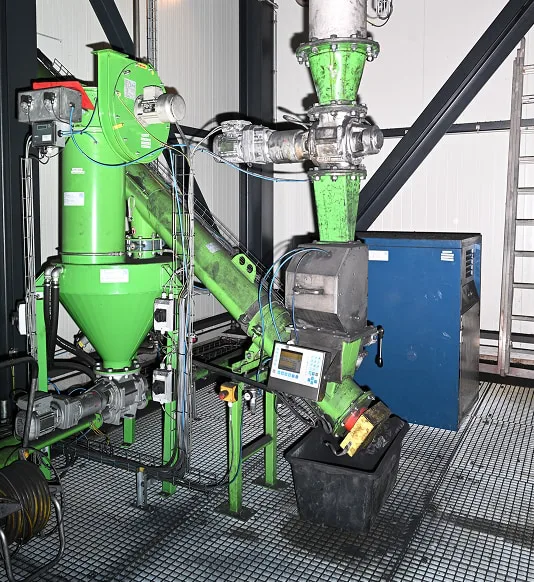
The process produces oil, coke and gas, from which valuable secondary raw materials can be generated and returned to industrial cycles.
RECOVERY OF RAW MATERIALS
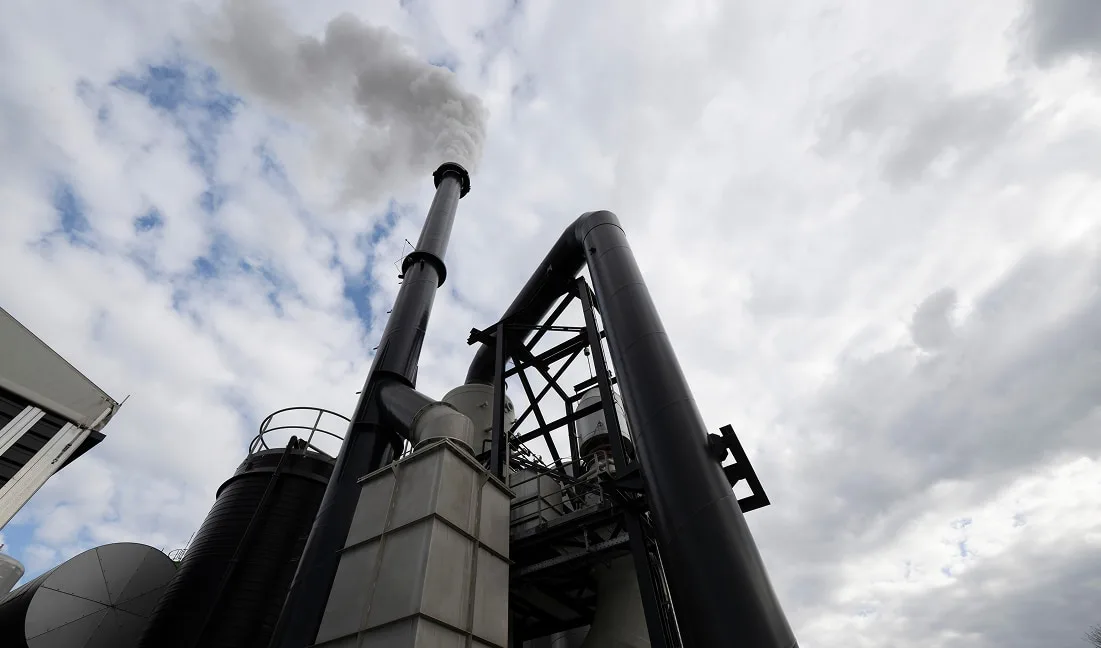
The vapors produced during the thermolysis process are condensed and separated into oil and gas, while the thermolysis coke is discharged separately, cooled and further processed. The cooled thermolysis coke is further processed into ThermoTireBlack® (TTB) through milling and pelletizing.


The Raw Materials
- Gas
- ThermoTireBlack® (TTB)
- ThermoTireOil® (TTO)
energy generation
The gas is then used to generate electricity in the company’s own power plant using turbines. The generated electricity flows directly back into the production process and is used to power the thermolysis plant. At the same time, the electricity generation process produces heat, which is used for the drying process in the milling and pelletizing plant.
The Raw Materials
WE BRING VALUABLE MATERIALS BACK INTO THE CYCLE
The recycling process initially produces various material streams: rubber granulate, which is used in subsequent steps to produce ThermoTireOil® and ThermoTireBlack®, as well as steel wire and textile fibers as byproducts. Key raw materials include ThermoTireOil®, ThermoTireBlack®, and gas. In this way, end-of-life tires are transformed into valuable raw materials that re-enter industrial value chains.
ThermoTireBlack® (TTB)
Produced from thermolysis coke that has been milled and then pelletized.
In certain applications ThermoTireBlack® can replace a portion of conventional carbon black, which can contribute to reducing the CO₂ footprint.
ThermoTireOil® (TTO)
Obtained from the vapors produced during the heating of rubber granulate in the thermolysis process and subsequently condensed;
REACH-registered.
ThermoTireOil® can be used as a feedstock in chemical production processes, partially replacing fossil raw material sources.
Gas
Used to power the thermolysis plant.
Sustainability
“THE EARTH`S RESOURCES ARE FINITE. THEREFORE, WASTE MUST BE OUR RAW MATERIAL SOURCE OF THE FUTURE.”
Pascal Klein, CEO
For Pyrum, the circular economy is not an abstract sustainability promise, but an integral part of its business model. Instead of incinerating or exporting end-of-life tires, Pyrum breaks them down into their valuable components. Using patented thermolysis technology, the company produces raw materials that can partially replace primary fossil-based raw materials.
This is precisely what makes it particularly relevant for Europe. Many industries rely on primary fossil raw materials and international supply chains. Pyrum demonstrates that some of these raw materials are already available in Europe – bound up in materials that were previously often considered waste. By recovering oil, industrial carbon black, and other valuable materials, Pyrum can help make raw material cycles more regional, independent, and resilient.
After an initial start-up using external energy, the thermolysis plant becomes energy self- sufficient during operation. According to a life cycle analysis conducted by Fraunhofer in 2022, the Pyrum process achieves net CO₂ savings of up to 965 kg of CO₂ equivalent per tonne of end-of-life- tires processed, including heat recovery. While Pyrum cannot solve the raw material shortage single-handedly, the company demonstrates a concrete way to create value from waste.
The following film shows how this creates a sustainable industrial system.
Research
“30.9 MILLION TONS OF END-OF-LIFE TIRES ARE GENERATED WORLDWIDE EVERY YEAR:
I TURN THEM INTO CERTIFIED QUALITY.”
Nina Gaasbeek, Research and Development
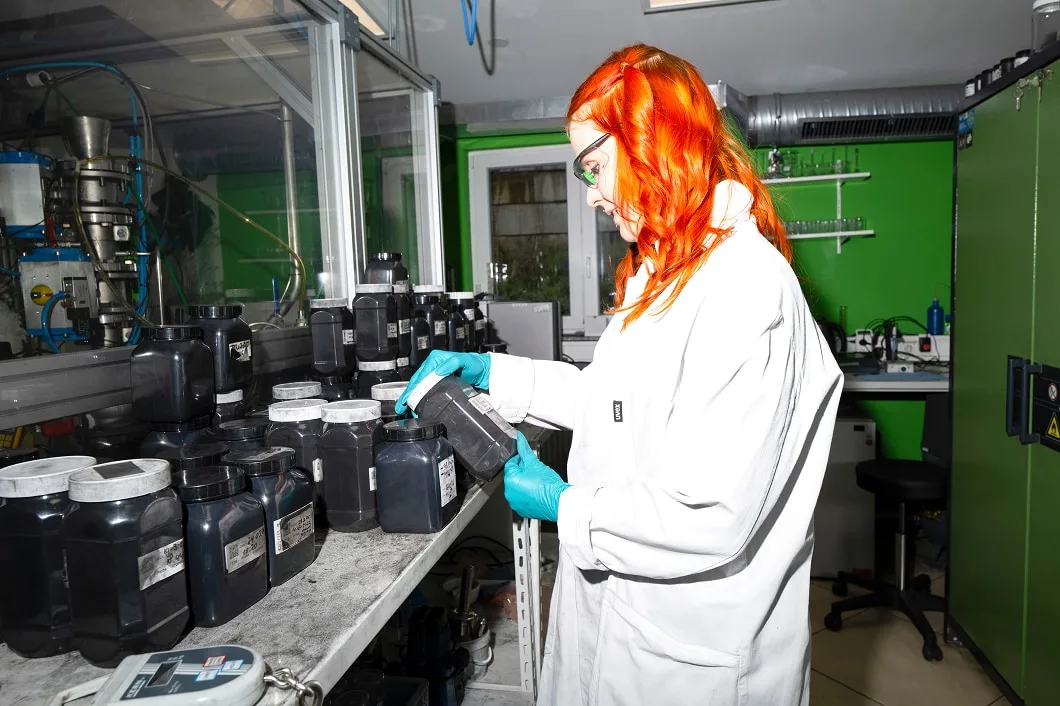
Research and development are among Pyrum’s core competencies. The goal is to continuously improve the patented recycling technology and to identify new applications for hard-to-recycle waste streams. To safeguard its technological edge and the quality of the recovered secondary raw materials in the long term, Pyrum operates its own laboratory for internal development work and customer research projects.
This allows for the targeted analysis of process parameters, the optimization of product properties, and the evaluation of new waste streams for their suitability for thermolysis. The insights gained are directly incorporated into the further development of processes, products, and applications.
TTB Development with Continental
In the research cooperation with Continental that has been ongoing since 2022, the two companies are further developing ThermoTireBlack® (patent pending under the name “rCB”), specifically for use in new tires. Through the optimization of raw materials, thermolysis parameters, and post-treatment, two new TTB types with improved properties for rubber and tire compounds have already been developed, tested, and patented.
New Material Streams: CFRP Recycling
In addition to end-of-life tires, Pyrum is also researching other hard-to-recycle materials for which few circular solutions currently exist. This includes the recycling of carbon fiber-reinforced plastics, or CFRP for short. In 2023, Pyrum achieved a world first by fully recycling CFRP. To this end, an automated, semi-industrial demonstration plant was commissioned at the Dillingen site. This plant will be further expanded in the future and provides the foundation for scaling up the technology and its use in in-house recycling facilities.
Certificates