Technology

Pyrum’s unique thermolysis process

Pyrum thermolysis is a process in which the Thermal decomposition of organic substances or rubber and plastic waste in the absence of oxygen. The process enables precise temperature and pressure control, which minimises the risks during the process. thermolysis process minimised (spark-​free and airtight) and raw materials of a consistently high quality guaranteed. These process conditions produce vapours that condense into oil at low temperatures, as well as permanent gas (gaseous hydrocarbon compounds) and coke.

Self-​sufficient system operation with excess energy

A special feature of the patented process is that after starting up the system once with external energy, sufficient energy is generated by the extracted gas to enable the system to operate autonomously. A surplus of energy is even generated, which can be utilised as thermal or electrical energy. resold can be realised.

Pyrum technology can process the following waste and input materials:

  • Used tyres (cars, lorries, motorbikes, construction machinery, etc.)
  • Bitumen mats and insulation (e.g. roofing felt made of bitumen)
  • EPDM and other elastomers, rubber waste (door and window seals)
  • PE/​PET (films, bottles, moulded parts, etc.)
  • Oil shale and oil sands (in test phase)

The process can be used to generate the following products: 

  • Rubber powder
  • Carbon black
  • Coke
  • Activated carbon
  • Crude oils
  • Gas (like natural gas)
  • Electricity
  • Waste heat

An interactive explanation of the thermolysis process

Sustainable and environmentally friendly future technology

The environmentally friendly disposal of Rubber and plastic waste will play a significant role in the coming years, as the current disposal methods are highly detrimental to the environment. The disposal of used tyres in cement plants, for example, is to be reduced by 2025. forbidden become more sustainable. Tyre manufacturers such as Michelin also aim to produce the majority of their tyres from recycled raw materials in the future.

In this respect, the innovative recycling process used is particularly well suited to serve as an example of a future-​orientated waste management concept. It combines Economic and ecological requirements to a waste concept with low investment and operating costs, serves the recovery of raw materials and substitutes fossil fuels.

Pyrum thermolysis: the multi-​stage recycling process flow

The thermolysis recycling process used here involves multiple stages.

Stage 1

  • Crushing (shredding) of the input material into granulates measuring 1 to 12 mm
  • Separation of metal and textile components for reuse

Stage 2

  • Thermolysis of the rubber granulate in the patented vertical reactor
  • Separation of the resulting vapour and coke

Stage 3

  • Condensation of the vapours
  • Separation of oil and permanent gas

Stage 4

  • Cooling the coke
  • Grinding, sieving, classification and pelletising of the coke into commercially available products: Carbon black, TTB (ThermoTireBlack)

Stage 5

Power generation for main and auxiliary units

  • Recuperation (recovery) of exhaust gas energy
  • Generation of electrical energy for self-​supply and sale by means of a combined heat and power (CHP) unit

Stage 6

  • Rectification of the oil
  • Storage of oil types in the tank farm

Stage 7

  • Cleaning of the exhaust air from the CHP unit to legally prescribed limits; the Pyrum thermolysis process itself does not produce any exhaust gases, only the CHP unit produces small quantities

Stage 8

Refinement of intermediate products: heat, oil and coke e.g.:

  • Combined heat and power with neighbours
  • Carbon black production from oil
  • Activated carbon production from coke
procedure-tile

Stage 1

- Crushing (shredding) of the input material into granulates from 1 to 12 mm

– Separation of metal and textile parts for reuse
procedure-tile

Stage 2

- Thermolysis of the rubber granulate in the patented vertical reactor

– Separation of the resulting products vapour and coke
procedure-tile

Stage 3

- Condensation of the vapours

– Separation of oil and permanent gas
procedure-tile

Stage 4

- Cooling the coke

– Grinding, screening, classification and pelletising of the coke into commercially available products: Carbon black, TTB (ThermoTireBlack®)
procedure-tile

Stage 5

Power generation for main and auxiliary units

– Recuperation (recovery) of exhaust gas energy

– Generation of electrical energy for self-​supply and sale with the aid of a combined heat and power unit (CHP)
procedure-tile

Stage 6

- Rectification of the oil

– Storage of oil types in the tank farm
procedure-tile

Stage 7

- Cleaning the exhaust air from the CHP unit to legally prescribed limit values; the actual Pyrum thermolysis process does not produce any exhaust gases, only the CHP unit produces small quantities
procedure-tile

Stage 8

Refinement of intermediate products: heat, oil and coke, e.g.:

– Combined heat and power with neighbours

– Carbon black production from oil

– Activated carbon production from coke

Pyrum thermolysis: the recycling process at a glance

Diagram of the Pyrum thermolysis process with five steps from tyre treatment to oil and electricity production.

Legend

  1. Shredding of rubber granulate to a grain size of 12 mm
  2. Pyrum thermolysis reactor: separation of the rubber granulate into vapour and solids
  3. Vertical cooler for solids
  4. Vapour condensation to oil and gas
  5. CHP unit for power generation
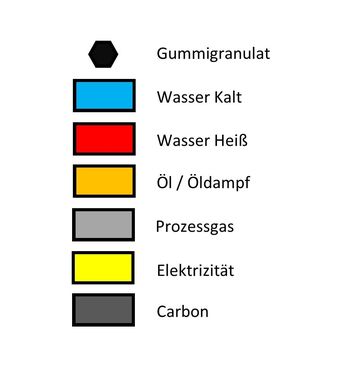
Legend for the Pyrum process diagram with symbols for rubber granulate, water, oil, process gas, electricity and carbon

Pyrum thermolysis: a boon for industry and the environment 

The high economic efficiency and sustainability of the patented Pyrum thermolysis process ensures that the increasingly acute problems in the recycling sector that exist in almost all industrialised nations can be solved in a technically flawless, environmentally friendly and profitable manner. In principle, this represents a secure and high-​yield investment with a high return. ROI of up to 25% represent.

environmentally neutral
0 %
energy self-​sufficient
0 %
modular
0 %
Endless
material cycle
The key figures shown in the „Thermolysis process“ diagram relate to a single reactor. However, a standard industrial plant from Pyrum consists of three reactors, which triples the production and recycling values shown.
The entire recycling and production capacity is flexibly scalable upwards to meet future requirements and a growing market.

1. recycling of used tyres

Environmentally friendly tyre recycling

New raw materials are obtained from old tyres using the patented pyrum thermolysis process: In addition to steel wire and fabric fibres, mainly Oil, gas and carbon – energy self-​sufficient and environmentally friendly. Compared to the used tyre disposal mix in Germany, this means that 72 % CO2 saved (according to the Fraunhofer UMSICHT study 2022).

2. shredding the used tyres

The used tyres are first shredded. Fabric fibres and Steel wire are filtered out and fed into the industrial production cycle.

Learn more

3. filter out steel wire

Pyrum steel wire: sustainable raw material for the steel industry

Up to 1 tonne of waste tyres can be used to produce 250 kg of Pyrum steel wire filtered out. By post-​treatment of the steel wire, Pyrum achieves a Purity of over 96 per cent. The wire can be purchased at the current mixed steel scrap price.

Learn more

4. filter out fabric fibres

Pyrum fabric fibres: Sustainable raw material for the construction industry

Up to 1 tonne of waste tyres can be used to produce 100 kg Pyrum tissue fibres filtered out. These are used as a valuable secondary raw material for the production of new Insulation material for the construction industry.

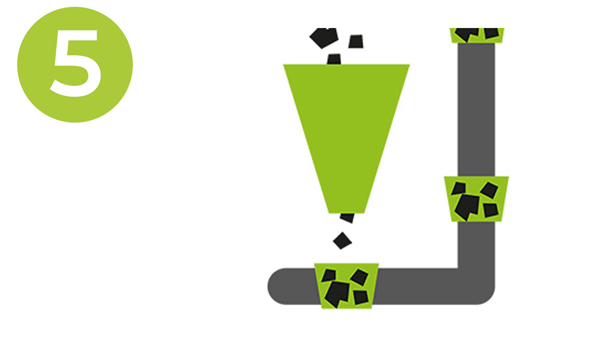
5. pyrum rubber granules

Diagram of the thermolysis process Step 5: Filling rubber parts into the conveying process

Pyrum rubber granulate: the material for top recycled products

The rubber granulate produced using the pyrum thermolysis process is a valuable and sought-​after secondary raw material for the production of sustainable recycled products that meets the highest standards. The granulate is available in four different grain sizes from 1 to 6 mm for different applications and almost every customer requirement.

Learn more

6. thermolysis of the tyre rubber

Pyrum thermolysis: Sustainable raw materials from tyre rubber 

Up to 1 tonne of waste tyres can be used to produce 700 kilograms Rubber filtered out. The granulated rubber (grain size 12 mm) is fed to the thermolysis process in the patented Pyrum vertical reactor. In the process, the rubber is Steam and Solid (coke) separated. In the process, sufficient Energy for the self-​sufficient operation of the system.

With pyrum thermolysis, in addition to Exhaust and heat energy valuable Raw materials for the sustainable manufacture of new products:

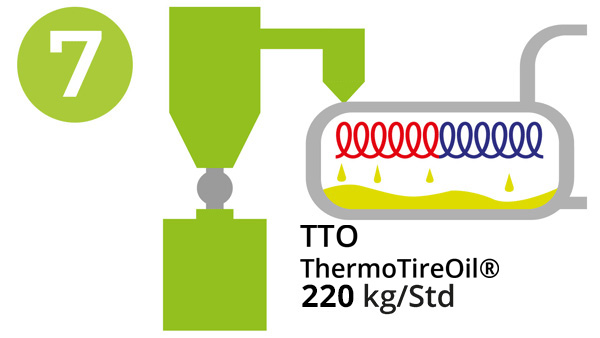
7. Pyrum ThermoTireOil®

Pyrum TTO (ThermoTireOil®): Sustainable raw material for the chemical industry

The vapours generated during pyrum thermolysis are condensed and stored in Permanent gas and TTO(ThermoTireOil®) separated. Pyrum TTO is a unique crude oil that is produced to the highest quality and consistent grade.

The REACH-​certified recycled oil is used as a raw material in various industries: chemical industry, refineries, carbon black production (CB) etc.

Practical applications

Pyrum TTO (ThermoTireOil®) is used, for example, in combination with biomethane as a raw material in the production of virgin plastics for Mercedes-​Benz vehicle components.

Learn more

Pyrum TTO (ThermoTireOil®) is used, for example, as a raw material for the production of polyamide for Outdoor clothing from the VAUDE brand used.

Learn more

8. BASF opts for Pyrum TTO

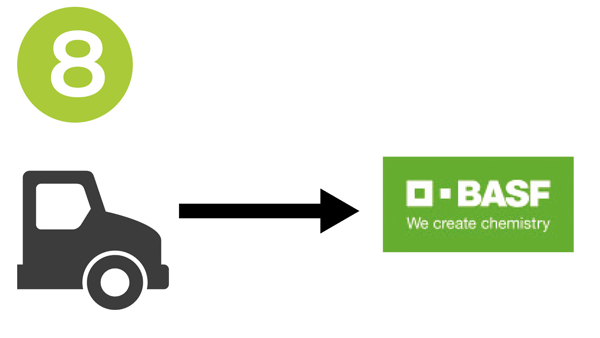
Diagram of the thermolysis process Step 8: Transport of the products by lorry to BASF

BASF relies on Pyrum TTO (ThermoTireOil)®)

The Chemicals group BASF has invested in Pyrum Innovations AG as part of the ChemCycling™ project. With the REACH-​certified TTO (ThermoTireOil), BASF secures®) a Pioneering source of raw materials and at the same time improves its own carbon footprint. BASF is already using the oil at its Ludwigshafen site for new plastics for the production of Vehicle components from Mercedes-​Benz.

9. pyrum thermolysis permanent gas

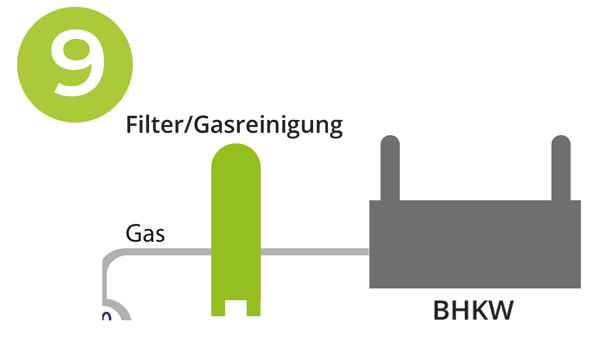
Diagram of the thermolysis process Step 9: Gas filtration and purification with utilisation in combined heat and power generation

Pyrum thermolysis permanent gas: energy self-​sufficient operation

A special feature of the patented Pyrum thermolysis process is that after starting up the system once with external energy, sufficient energy is generated by the gas obtained in the condensation process to enable the system to operate independently. A surplus of energy is even generated, which can be sold on as thermal or electrical energy.

11. pyrum thermolysis coke (carbon black)

Pyrum thermolysis coke (carbon black): High-​tech raw material

The coke produced using the Pyrum thermolysis process can be used unground, with a particle size of up to 4 mm, as a soil improver, substitute fuel or filler. However, the majority of Pyrum thermolysis coke is used in the production of TTB (ThermoTireBlack®).

Learn more

12. Pyrum ThermoTireBlack®

Pyrum TTB (ThermoTireBlack®): The raw material for new tyres

Through further processing in a grinding plant, Pyrum produces high-​quality TTB (ThermoTireBlack®), which is an increasingly sought-​after raw material in the tyre industry for the production of sustainable new tyres. This sustainably closes the material cycle. Pyrum TTB (ThermoTireBlack®) can be supplied in ground form in sizes from 7–36 µm.

Practical applications

The TTB (ThermoTireBlack®) extracted from the rubber of old bicycle tyres using pyrum thermolysis is fed back into the manufacturing process for new bicycle tyres.

Learn more

In the medium term, the particularly high-​quality pyrum carbon black TTB (ThermoTireBlack®) is to be used for Continental’s tyre production.

10. gas turbine power generation

Efficient energy generation from process gas

A key feature of gas turbine power generation is the utilisation of the gas produced in the process to generate electricity directly. After the initial start-​up of the plant with external energy, the gas obtained can be continuously converted into electricity using gas turbines to provide electrical energy. This enables largely energy self-​sufficient operation. A key advantage of this technology is the extraction of process heat to reduce the need for natural gas. This technology combines high efficiency with sustainable resource utilisation and helps to reduce external energy requirements.